How Daily Logs Help With Lien Waiver Workflows
Lien waivers are paperwork. Daily logs are proof. When payment timing, work dates, or scope gets questioned, a consistent daily record keeps waiver workflows from turning into chaos.
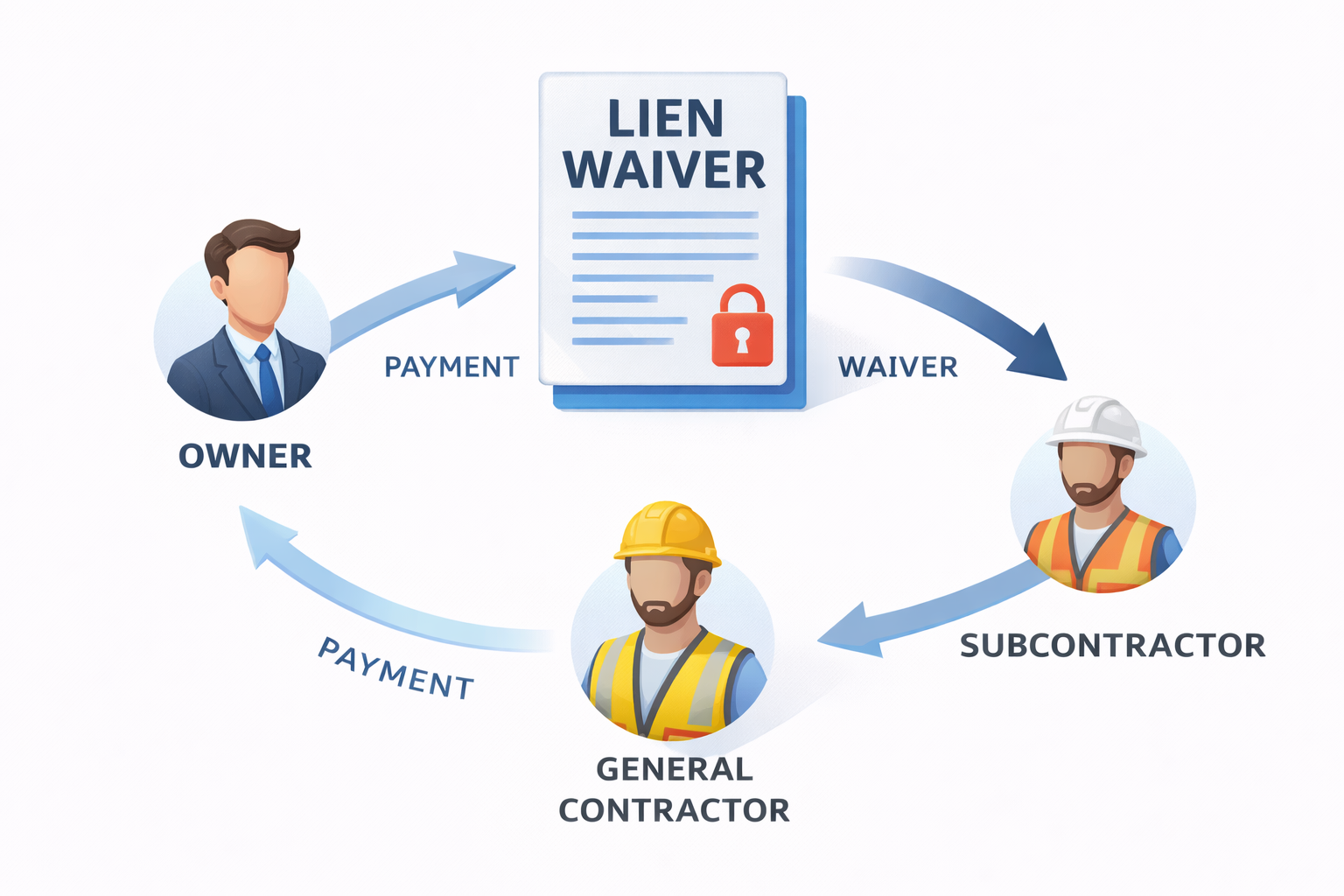
Lien waivers should be straightforward: you get paid, you waive rights for that amount and period. In real life, waiver workflows break down because the underlying project record is messy: unclear work dates, missing documentation, disputed scope, and “we’ll figure it out later” progress notes.
The simple idea
Daily logs don’t replace lien waivers. They make your timeline believable — and your closeout cleaner.
Where lien waiver workflows go sideways
These are the recurring pain points contractors run into:
- Date disputes: “That work wasn’t performed during this period.”
- Scope disputes: “This isn’t complete / wasn’t included.”
- Partial payments: confusion around what’s being waived and why
- Delay arguments: schedule impacts vs “you just didn’t work”
- Closeout gaps: missing documentation when it’s time to finish
How daily logs support waivers (practically)
You don’t need to write daily logs “for waivers.” You just need to capture consistent facts that become useful later:
Work period credibility
Logs establish when work actually occurred—day by day—so waiver periods make sense.
Progress documentation
Location-based notes + photos show what was completed and when.
Delay and access impacts
Weather, inspections, coordination issues—captured as facts, not feelings.
Closeout continuity
A coherent timeline makes it easier to resolve remaining items without guessing.
What to document (the waiver-friendly checklist)
If you want logs that support smooth waiver workflows, don’t overthink it. Focus on:
- Work performed (with location/area)
- Subcontractors present (if relevant)
- Deliveries received and where stored
- Inspections/tests and outcomes
- Delays/issues with cause + impact + action taken
- Photos with short captions
If you want the broader daily report structure, see: What to include in a daily report.
How DailyLogsPro fits with LienWaiverPro
DailyLogsPro is being built to create a verified day-by-day project record. LienWaiverPro focuses on generating state-compliant waiver PDFs that don’t get kicked back. Together, you get cleaner documentation through the whole payment cycle.
The “clean closeout” workflow
- DailyLogsPro captures the daily record (work, photos, delays, conditions)
- Billing uses that record to support pay apps when questioned
- LienWaiverPro produces the waiver PDFs with fewer errors and less arguing over dates
Launch is planned for Q2 2026. Want early access? Join the list.
FAQ
Related guides
- How daily logs support pay apps
- What to include in a daily report
- Common daily log mistakes
- How to document weather delays
DailyLogsPro (Q2 2026)
Verified field reporting: weather, crew counts, photos, notes, and geo/time capture — built to support billing and reduce disputes.
Get Launch AlertsBuilt by Morton Technologies LLC (Metro Detroit).